OSHA sanitation standard 1926.51 sets the baseline for construction toilets: one unit for the first 20 workers, and roughly one per 10 workers thereafter when no sewered facility exists on site. Finger Lakes Portable…
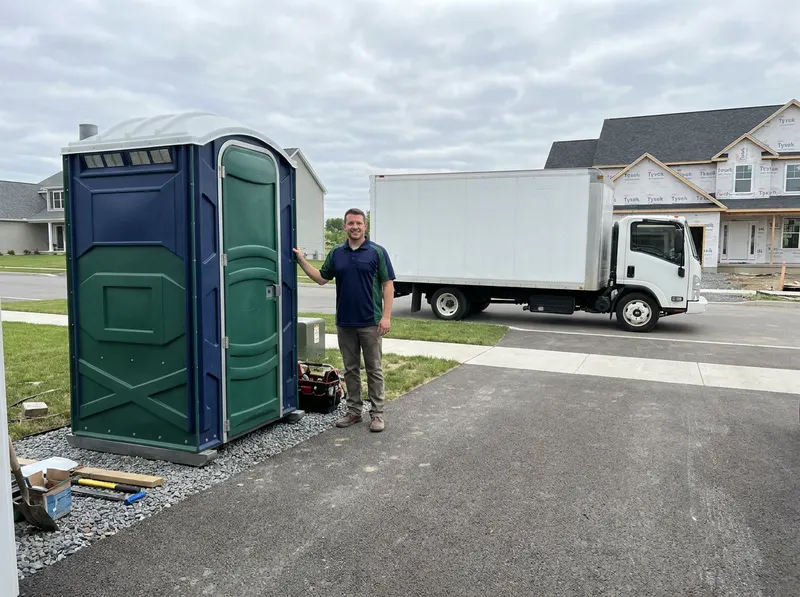
OSHA sanitation standard 1926.51 sets the baseline for construction toilets: one unit for the first 20 workers, and roughly one per 10 workers thereafter when no sewered facility exists on site. Finger Lakes Portable Toilet Rental sizes job-site orders to that ratio. A framing crew of 8 on a South Auburn infill lot needs one standard unit; a 25-worker paving job along the Genesee Street corridor needs two, with a mid-week extra service if the crew works Saturdays.
A standard construction unit measures about 43 inches wide by 43 inches deep by 88 inches tall and weighs roughly 200 pounds empty, so placement needs a level 4-by-4-foot pad within 20 feet of where the delivery truck can pull up. Sites off North Division Street and in the Fitch Avenue area with tight setbacks often stage the unit at the driveway apron so the pump truck reaches it without crossing fresh concrete. On soft ground around Owasco Flats and Sand Beach, a plywood sheet under the unit keeps it from settling after spring rain. The unit should sit clear of the swing radius of excavators and away from overhead power drops.
Weekly service is the standard cycle for an occupied job site: the truck pumps the tank, refills the freshwater flush where fitted, restocks toilet paper, and refills sanitizer. A crew of 10 working five days generates enough use that skipping a week leaves the tank near capacity. If a site adds workers mid-project, a second unit added part-way through a cycle is prorated rather than charged a full 28 days. For a Melone or East Hill remodel where the homeowner and one or two tradesmen share the site, a single standard unit on monthly service is the common fit; a larger commercial pour or a multi-crew build near Osborne Corners or the West End is where the second unit and twice-weekly pumping earn their cost by keeping tanks below the point where they overflow or smell.
Duration drives the pricing structure more than crew size. A standard unit is billed on a 28-day cycle, so a 3-week roofing job and a 4-week foundation job cost the same base rate; jobs stretching past one cycle roll into the next month's rate. Placement inside the City of Auburn does not require a permit for a unit on private construction property, but units set on a public sidewalk, road shoulder, or Cayuga County right-of-way do need approval before delivery, which the site contractor arranges.
Every job gets a firm, written price after a free on-site visit.
Tell us about your construction site toilet rental job in Auburn and we'll send a clear, written quote, usually the same day.
 Finger Lakes Portable Toilet Rental